Museo de Arte Contemporáneo 265 S Church Ave Tucson, AZ 85701
Horario:
Jueves a sábado: 11 AM – 6 PM
Domingo: 11 AM – 4 PM
Lunes a miércoles: Cerrado
520.624.5019 info@moca-tucson.org
Museo de Arte Contemporáneo 265 S Church Ave Tucson, AZ 85701
Horario:
Jueves - Sábado: 11 AM – 6 PM
Domingo: 11 AM – 4 PM
Lunes - Miércoles: Cerrado
520.624.5019 info@moca-tucson.org








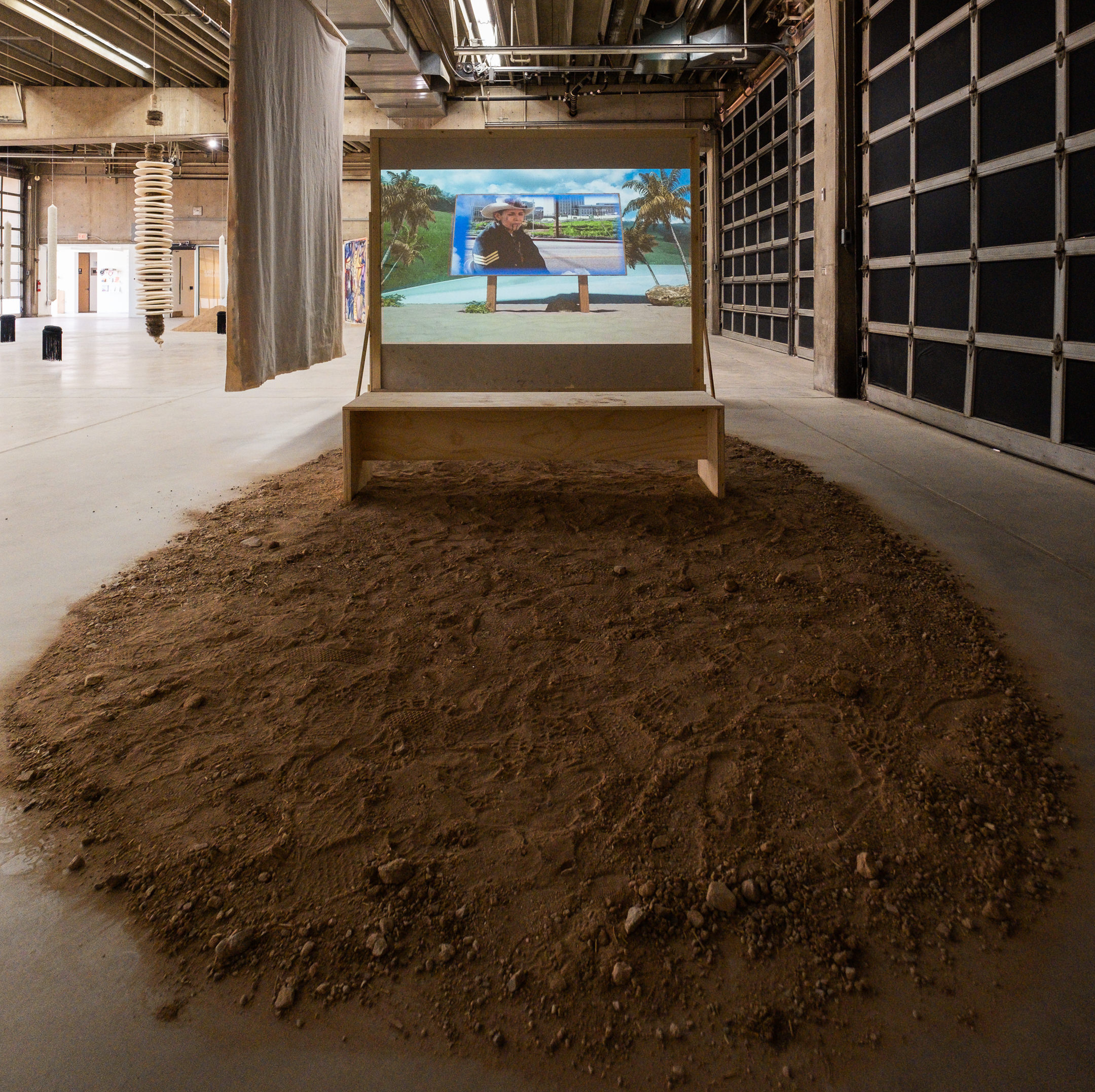


Grace Rosario Perkins: La relevancia de sus datos
Logo-Windgate-BN_para_uso_general.png
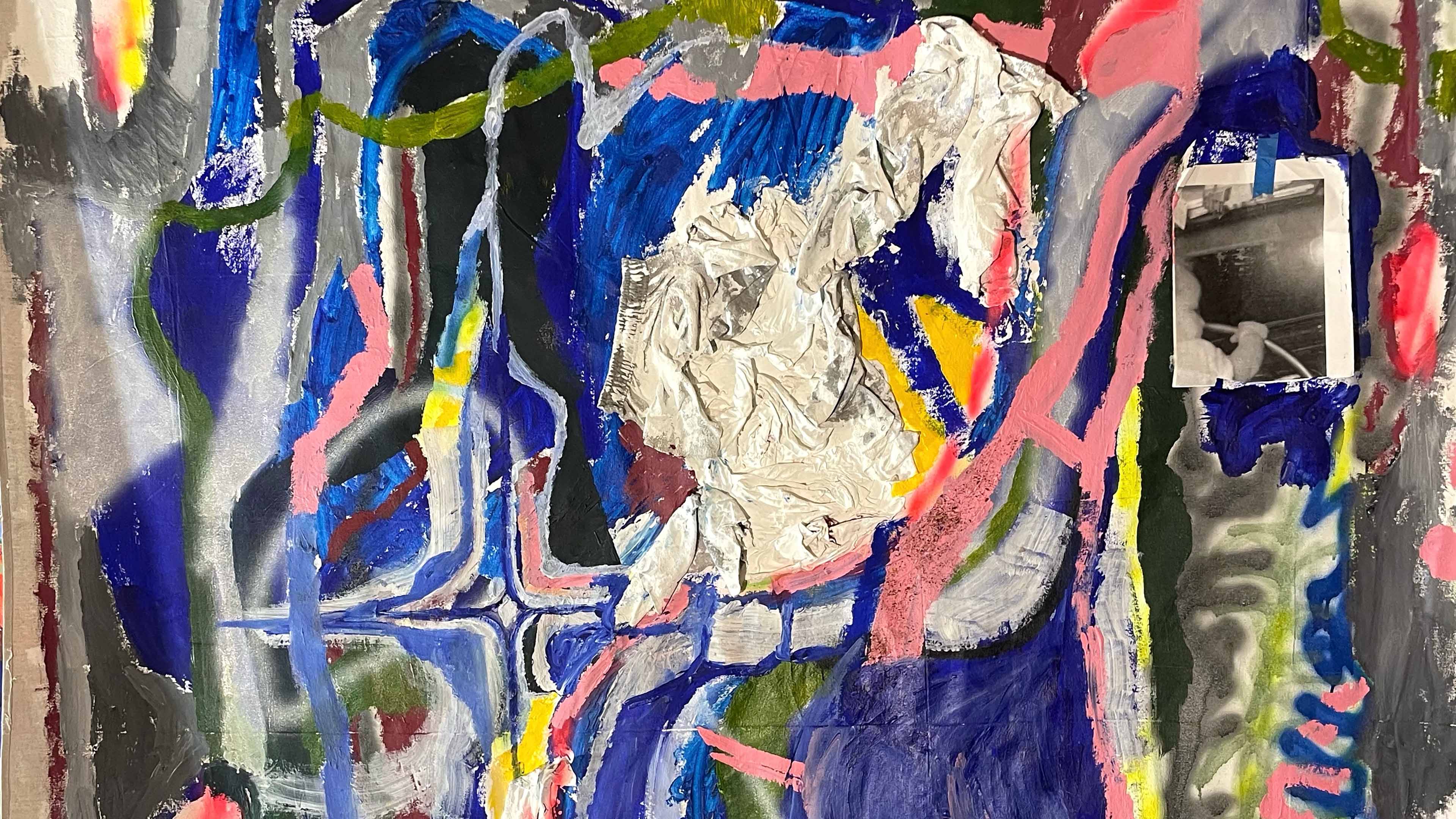
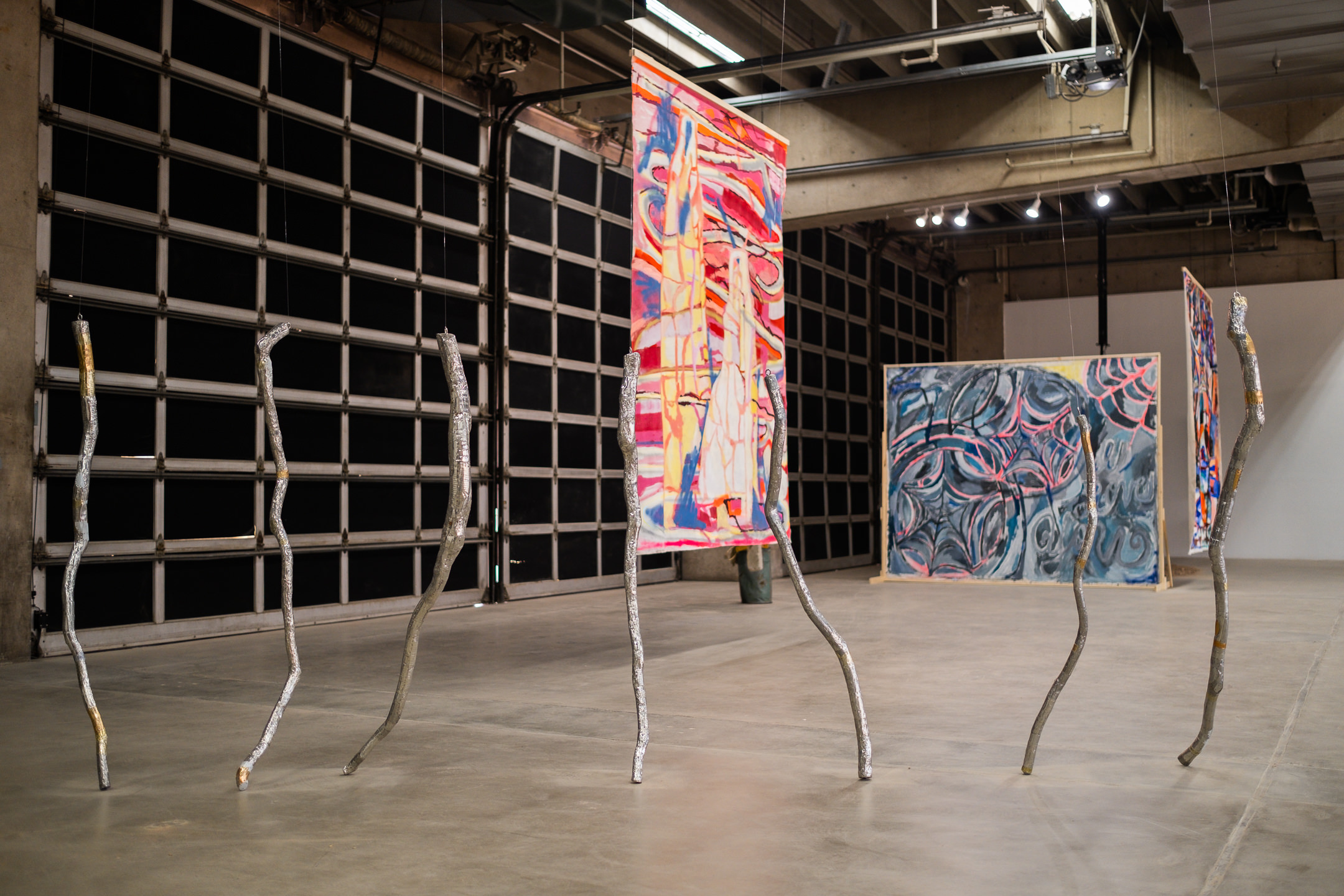
MOCA Tucson is proud to present The Relevance of Your Data, an exhibition featuring fourteen new large-scale paintings by Grace Rosario Perkins commissioned by MOCA for her first solo museum exhibition. Perkins invited a group of artists close to her to participate in the show through artworks and performances––Lonnie Holley, Fox Maxy, Olen Perkins, and Eric-Paul Riege. Connected by friendship, kinship, and process-based creation, Perkins and her collaborators approach artmaking as a path to collective healing.
The exhibition’s title refers to the insidious ways personal data is used to categorize an individual’s identity in order to ascribe value or erase relevance––practices that are particularly harmful to people of color. The artists in the show seek to build solidarity between Black and Indigenous makers, and use techniques like abstraction, collage, and improvisation to rewire reductive categories.
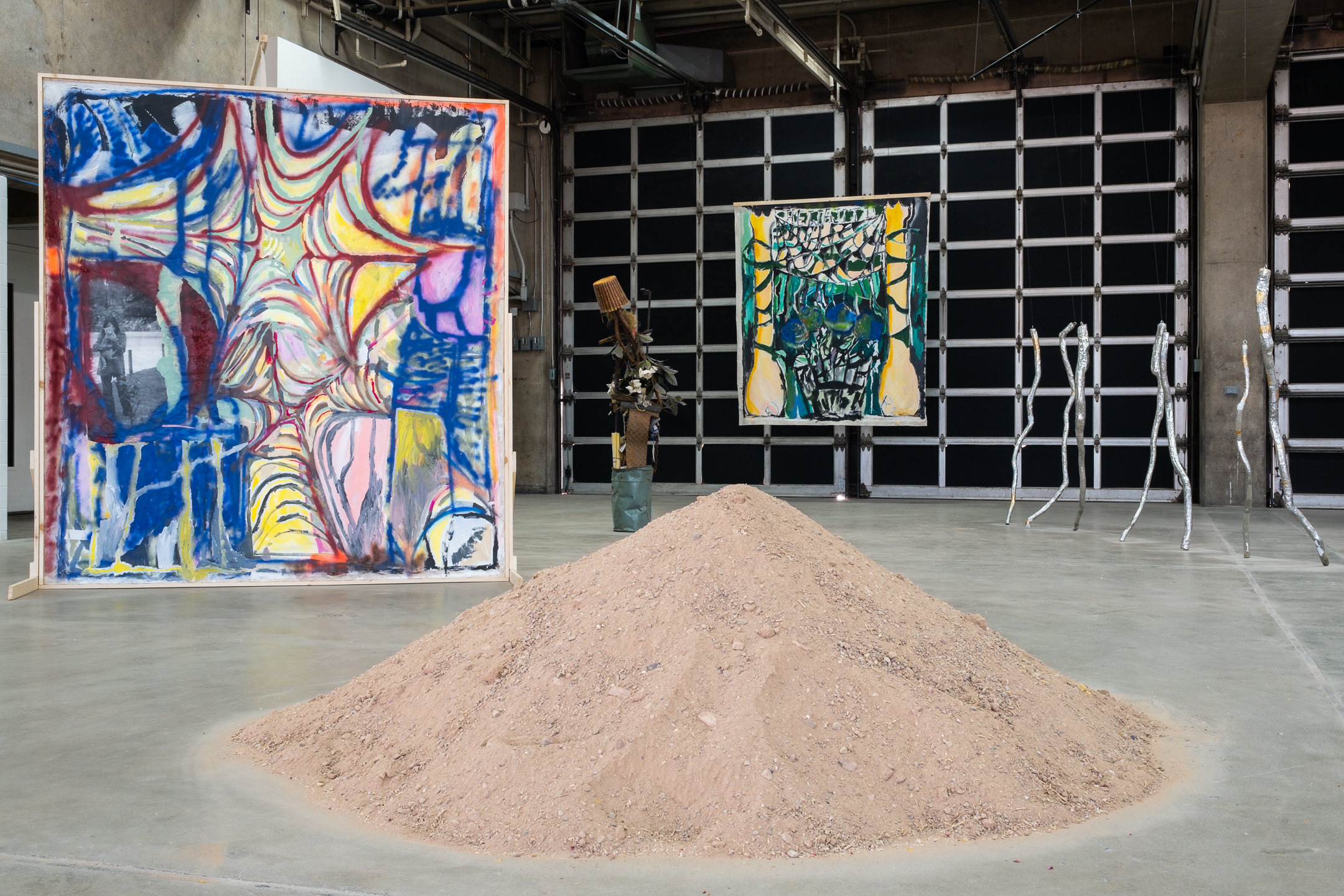
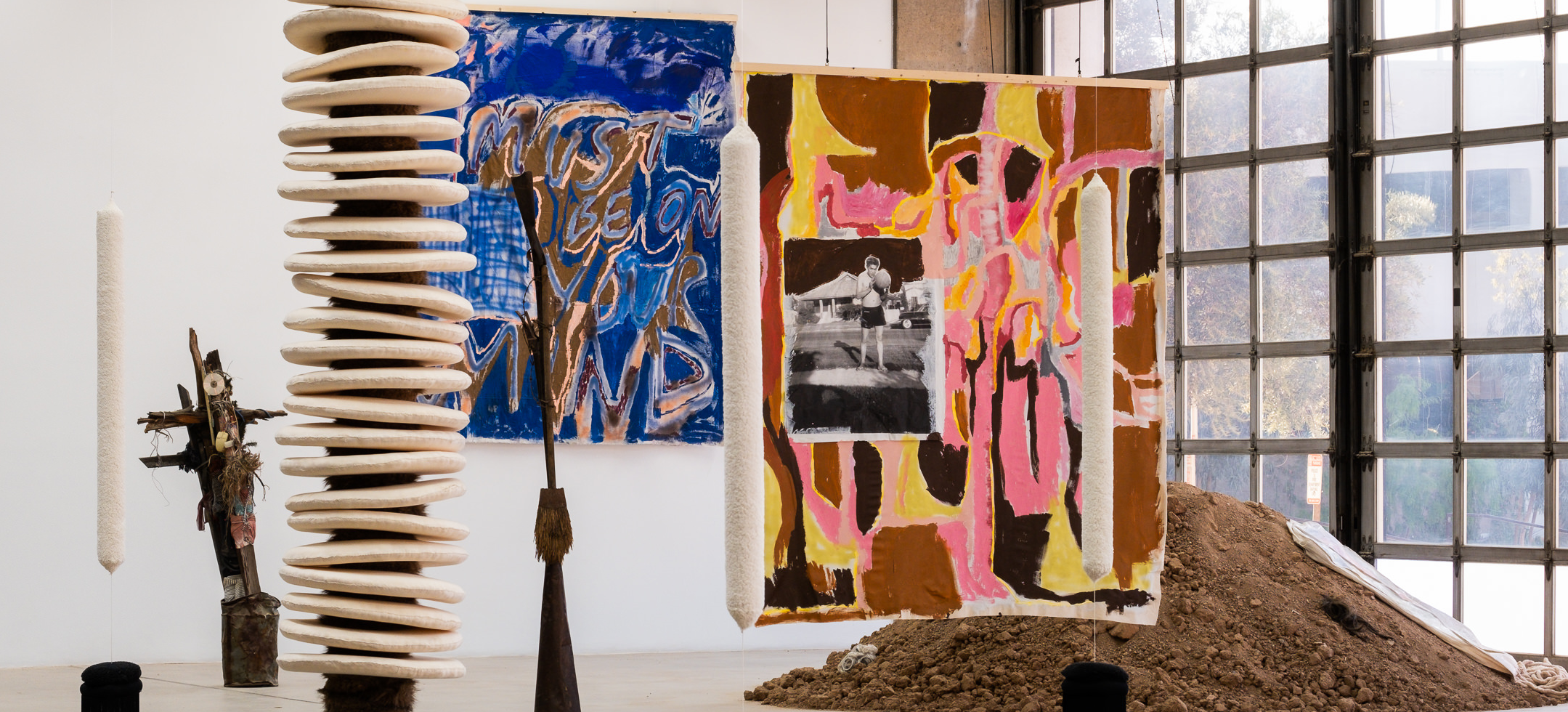
Perkins' vibrant paintings will hang throughout MOCA’s space, creating surfaces that support other artists' work. The paintings are heavy and layered with readily available materials like fabric, spray paint, tape, and paper. Perkins incorporates family photos and found objects as well as phrases like ‘I love you’ or symbol-rich imagery like spiderwebs into the work. She uses autobiographical content but scrambles the information by covering or erasing elements of the paintings, refusing legibility to sustain privacy.
Spiderwebs appear in many of Perkins’ paintings, and are emblematic of the exhibition’s overall approach. Webs are adaptive and expansive; like webs, her paintings create structures that connect artworks. For example, Eric-Paul Riege uses Perkins’ paintings as raw material for new soft sculptures and as a site for performance. Riege’s work centers weaving––his fiber-based objects and wearable sculptures honor generations of weavers in his family and express his own stories. Fox Maxy’s film Maat densely collages fragments of personal footage, recordings of activists, and rapid-cut sequences of land, digital space, and the border wall. One of Perkins’ paintings acts as a screen for Maxy’s film, echoing their mutual support of each other’s work.
Olen Perkins, Grace’s father, shows a series of sculptures rendered from mesquite branches and aluminum cans collected in the Gila River Indian Community, where the artist lives and works. The gilded staffs build rhythm in their iterations, and act as guideposts that connect land and family. Lonnie Holley transforms found materials into sculptures layered with meaning. With a multivalent creative practice revolving around improvisation, Holley contributes five major sculptures to the show, and will stage a performance and series of workshops later in fall 2022. His vertical, post-like assemblages visually frame Perkins’ paintings, reflective of Holley’s longtime mentorship and friendship with the artist.
Together, these interconnected artworks operate outside of any singular category, creating a generous conversation about identity, land, and collectivity. Through friendship and collaboration, the artists produce a web of support to create space for an expanded sense of self and community.
Grace Rosario Perkins: The Relevance of Your Data is organized by Laura Copelin, Curator-at-Large, with Alexis Wilkinson, Assistant Curator, MOCA Tucson.
The exhibition is supported by VIA Art Fund and Wagner Foundation; Vantage West Credit Union; Desert Diamond Casinos Entertainment; Blum Poe, Los Angeles/ New York/ Tokyo; Arts Foundation for Tucson and Southern Arizona; The Center for Imagination in the Borderlands at Arizona State University; Public Applied Humanities at the University of Arizona; and MOCA Tucson’s Board of Trustees, Ambassador Council, and Members.
In-kind support provided by The Downtown Clifton Hotel and Barrio Brewing Company.
Sobre el artista
Grace Rosario Perkins (n. 1986, Santa Fe, Nuevo México; con sede en Albuquerque, Nuevo México; Diné/Akimel O’odham) es una pintora autodidacta con 15 años de trayectoria como educadora artística. Recientemente se desempeñó como Profesora Asociada de Pintura y Dibujo en Mills College, Oakland, California. Ha colaborado con instituciones como ONE Archives, Oakland Museum, Residency Art Gallery, Yerba Buena Center for the Arts, Cooper Union y Occidental College, entre otros. Perkins ha sido nominada a la United States Arts Fellowship y al premio SECA del SFMOCA.
La práctica artística de Lonnie Holley (n. 1950, Birmingham, Alabama; con sede en Atlanta, Georgia), ampliamente admirada por la crítica, abarca la pintura, el dibujo, la escultura de ensamblaje, el tallado en piedra arenisca y el performance, combinando música experimental y poesía. Su obra forma parte de las colecciones permanentes del Metropolitan Museum of Art, el Whitney Museum of American Art y el Smithsonian American Art Museum, entre muchos otros. Sus piezas han sido incluidas en exposiciones colectivas institucionales en el NSU Art Museum (2022), el Baltimore Museum of Art (2021) y el Philadelphia Museum of Art (2019). Holley también ha protagonizado exposiciones individuales en el Parrish Art Museum (2021) y el Atlanta Contemporary Art Center (2017). Ha sido el tema de varios documentales y su propio cortometraje se estrenó en Sundance en 2018.
Fox Maxy (con sede en San Diego, California; Mesa Grande Band of Mission Indians y Payómkawichum) es cineasta y artista. Su trabajo se ha proyectado en Doc Fortnight del MoMA, BAM CinemaFest, LACMA, Rotterdam (IFFR), AFI Docs e ImagineNative Film Festival, entre otros. En 2022, Fox fue nombrada Merata Mita Fellow del Instituto Sundance. Actualmente trabaja en su primer largometraje titulado Watertight.
Olen Perkins (n. 1958, Sacaton, Arizona; con sede en Uhs Kehk / Blackwater, Arizona; Akimel O’odham) es pintor y escultor. Su obra se ha exhibido en SOMArts San Francisco, el Institute of American Indian Arts y el Tucson Museum of Art, entre otros. Posee una Maestría en Bellas Artes (MFA) por la Universidad de Illinois, donde también ejerció como Profesor de Arte.
Eric-Paul Riege (n. 1994, Gallup, Nuevo México; con sede en Naʼnízhoozhí; Diné) crea esculturas tejidas de materiales blandos, arte usable, collages digitales y performances de larga duración vinculados a su herencia y espiritualidad, particularmente a las tradiciones intergeneracionales del tejido. Su trabajo es una manifestación de la filosofía Diné de Hózhó, que abarca la belleza, el equilibrio y la armonía. La primera presentación individual de Riege en un museo tuvo lugar en el Institute of Contemporary Art, Miami, en 2019. Ha presentado su obra en la Bienal SITE Santa Fe 2018, el Navajo Nation Museum y el Heard Museum. En 2021 participó en la Trienal Prospect New Orleans y en 2022 en la Bienal de Toronto.
Créditos de las imágenes: Vistas de la instalación, The Relevance of Your Data, MOCA Tucson, 2022. Fotografías de Julius Schlosburg.
Archivo
2 de abril de 2022 – 16 de octubre de 2022